What Is Integrative Mental Health? A Whole-Person Approach
If you've tried therapy or medication and still feel like something is missing, you're not alone. Integrative mental health is a care model that goes beyond symptom management, combining psychotherapy, nutritional support, and brain-based tools like neurofeedback to address what's actually driving the problem. This post breaks down what it means, who it's designed for, and how to know if it's the right fit for you.
How This Approach Differs From Conventional Care
Integrative mental health is a care model that combines conventional psychotherapy with brain-based and biological supports, such as neurofeedback and functional nutrition, to address the root causes of mental health conditions rather than symptoms alone.
Conventional care typically follows a structured path:
- Assessment
- Diagnosis
- Therapy
- and in many cases, medication
That model works well for many people, though it has limits when symptoms persist despite treatment or when underlying contributors like gut health, sleep, inflammation, or chronic stress are never examined.
This model expands conventional care by asking what else might be driving the symptoms. Rather than working backward from a diagnosis, it starts with the whole person. A root-cause mental health approach investigates what is happening physiologically, psychologically, and behaviorally before a care plan is built.
The National Center for Complementary and Integrative Health defines this type of care as an approach that brings together conventional and complementary methods for the whole person.A care model that addresses only one dimension of health is unlikely to produce the depth of change most people are seeking.
The Core Pillars of a Whole-Person Therapy Approach
Psychotherapy as the Foundation of Holistic Mental Health Care
Talk therapy is the cornerstone of any coordinated care plan. Approaches like cognitive behavioral therapy, EMDR, and somatic therapies address thought patterns, emotional regulation, and trauma processing. Within this model, therapy does not stand alone but operates as one element among several.
Holistic mental health care layers these therapeutic methods with biological and behavioral supports, so that what is addressed in session is reinforced outside of it.At Infinite Potential, this begins with
individual therapy designed around each person's clinical picture and goals. The practice also provides
child therapy, [family therapy] and
couples therapy within the same whole-person care model.
Functional Nutrition and the Root-Cause Mental Health Approach
Nutrition is one of the most underutilized tools in mental health care. Deficiencies in omega-3 fatty acids, B vitamins, magnesium, and zinc have each been linked to mood disorders and cognitive difficulties.Functional mental health approach examines these connections directly, rather than treating the brain as if it exists separately from the body.
A root-cause mental health approach to nutrition looks at what the body needs to support healthy neurological function. This may involve reviewing dietary patterns, identifying gaps in key nutrients, and attending to gut health, given the well-established connection between the gut microbiome and mood regulation.
Neurofeedback as a Tool Within Integrative Psychiatry
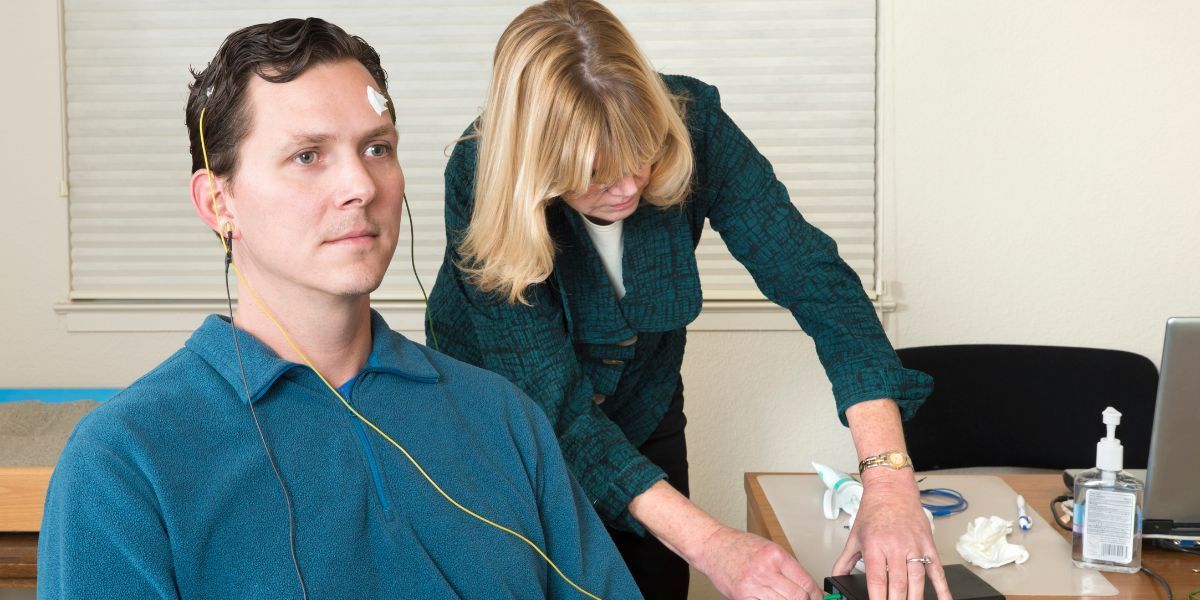
Neurofeedback is a non-invasive, brain-based intervention that trains the brain toward more regulated patterns of electrical activity. Within integrative psychiatry, it works alongside therapy and other supports rather than replacing them.rofeedback program uses qEEG brain mapping data to personalize each client's training plan, so sessions target that person's specific brainwave patterns. A full course of neurofeedback therapy may involve anywhere from 20 to 40 sessions, with up to 60 sessions for more complex cases.
Research published in peer-reviewed literature has examined neurofeedback applications for ADHD, PTSD, anxiety, and traumatic brain injury. A systematic review and meta-analysis published in
JAMA Psychiatry examined neurofeedback protocols for ADHD and found modest gains in processing speed alongside small improvements in trials using established standard protocols while a separate meta-analysis published in the
European Journal of Psychotraumatology reported moderate benefits for PTSD symptoms across diverse trauma populations.
Conditions That Respond Well to This Approach
Many people who seek this type of care have been managing symptoms for years. They may have tried multiple approaches or found that conventional care only partially helped.
The following presentations are commonly seen within these practices:
Anxiety and chronic stress:
When anxiety does not fully resolve with therapy alone, nutritional factors, nervous system dysregulation, or disrupted sleep may be contributing. Addressing those dimensions alongside therapy often produces a more complete response.
Depression:
A functional mental health approach for depression. the word "treatment" is flagged as banned words that may examine inflammatory markers, hormonal balance, nutritional status, and sleep patterns alongside traditional therapeutic work.
ADHD and attention difficulties:
For both children and adults, a coordinated approach combines behavioral strategies, nutritional assessment, and in many cases neurofeedback, to support focus and executive function without relying on a single method.
Trauma and PTSD:
Body-based interventions, brain training, and trauma-informed therapy can work together to help the nervous system process stored stress responses more effectively.
Concussion and TBI recovery:
Whole-person therapy that incorporates neurofeedback and nutritional support can be part of a post-concussion care plan, particularly when cognitive symptoms persist beyond the acute phase.
OCD:
Structured therapeutic approaches combined with brain-based tools can support individuals managing OCD, addressing both behavioral patterns and underlying neurological dysregulation.
To review the full range of conditions Infinite Potential supports, visit the areas of specialty page.
What Care at Infinite Potential Actually Looks Like
Infinite Potential is a neurofeedback and whole-person care practice based in Round Rock, TX, serving clients throughout the Austin area. The practice is built on the premise that lasting outcomes require attending to the brain, the body, and the full life context of each person.
A care plan here may include any combination of the following:
- Therapy:
Individual, family, couples, and child therapy provided by licensed providers with training in evidence-based modalities
- Neurofeedback:
qEEG-guided brain training sessions that help the brain develop more self-regulated patterns. Session counts are personalized, with more complex presentations typically requiring a longer course of care.
- Integrative nutrition:
Attention to dietary patterns and nutritional factors that directly influence brain health, mood stability, and cognitive performance.
- Cognitive behavioral therapy:
Structured, evidence-based work to identify and shift thought patterns and behavioral responses that maintain distress. Learn more about
CBT at Infinite Potential
No two people arrive with the same needs, so there is no standard template.Each plan reflects the individual's goals, history, and clinical picture. Learn more about the full scope of integrative services at Infinite Potential.
Is Integrative Mental Health the Right Fit for You?
If you have been managing a mental health condition for some time and conventional care has not produced the results you were hoping for, integrative mental health may offer what has been missing. It is also a strong fit for people who want to understand the root cause of their symptoms rather than simply learning to manage them.
It is not a rejection of conventional care. It is an expansion of it. By addressing nutrition, neurological function, behavior, and emotional health together, it opens more pathways for meaningful improvement than any single approach can provide on its own.
The field of integrative psychiatry and whole-person therapy continues to grow as more providers and researchers recognize that the brain and body do not function in isolation.
A review published in
Current Treatment Options in Psychiatry documented the growing evidence base for complementary and integrative approaches in mental health care, noting that mind-body therapies and nutritional interventions show the strongest support for mood and cognitive outcomes.
For families and individuals in Round Rock and the greater Austin area, Infinite Potential offers a grounded, local option for this kind of care. The team serves children, teens, adults, and families across a wide range of presentations, using therapeutic and brain-based tools tailored to each person's actual needs.
You Don't Have to Figure This Out Alone
If you're ready to explore a more complete path to mental wellness, the team at Infinite Potential in Round Rock is here to help. Schedule your consultation today or call 512-230-3740 and take the first step toward care that works with your whole self.
Frequently Asked Questions
1. What does integrative mental health care involve?
This care model combines conventional therapies such as psychotherapy and CBT with complementary supports like neurofeedback, functional nutrition, and mind-body practices. The goal is to address the full range of factors contributing to a person's mental health, not only the presenting symptoms.
2. How is integrative mental health different from conventional therapy?
Conventional therapy typically focuses on psychological patterns and emotional processing. This model expands that scope to include biological, nutritional, and neurological factors. Where conventional therapy addresses how you think and feel, this approach also asks whether your brain, gut, and body are functioning in ways that support that work.
3. What mental health conditions does an integrative approach address?
This approach has been applied to anxiety, depression, ADHD, trauma and PTSD, OCD, post-concussion syndrome, and chronic stress-related conditions. It is also used for individuals who are functioning reasonably well but want to improve cognitive performance and emotional resilience.
4. Does integrative mental health care include medication?
It can, depending on the individual's needs and care team. Some people in this type of care plan are also working with a prescribing provider on their own. Others pursue this path specifically to explore non-medication options, which is where tools like neurofeedback and nutritional support are particularly relevant. Neurofeedback at Infinite Potential is offered on a self-pay basis and is not covered by insurance.
5. Is integrative mental health evidence-based?
The core components, including psychotherapy, CBT, and neurofeedback, have established research supporting their effectiveness. Functional nutrition and lifestyle-based interventions are supported by a growing body of evidence. Integrative psychiatry does not ask providers to choose between evidence and a whole-person perspective. It asks them to bring both to every care plan.
6. How do I get started with integrative mental health care in Round Rock?
Infinite Potential serves children, teens, adults, and families in Round Rock, TX, and the surrounding Austin area. You can
reach out
to connect with the team and explore whether the practice is a good fit for your needs.
Key Takeaways
- This care model treats the full person, not just a diagnosis. It combines therapy, nutrition, neurofeedback, and other evidence-based tools into a coordinated plan.
- A root-cause mental health approach asks why symptoms are present, not just how to manage them. This typically leads to more targeted and sustainable outcomes.
- Holistic mental health care includes attention to gut-brain connection, nutritional status, sleep quality, and nervous system regulation alongside traditional psychotherapy.
- A functional mental health approach is a complement to conventional care, not a replacement. It opens additional pathways for improvement that symptom management alone cannot provide.
- Whole-person therapy and integrative psychiatry continue to build their evidence base, with growing research supporting their application across a wide range of conditions.
- Neurofeedback at Infinite Potential is guided by qEEG data and may involve up to 60 sessions for complex presentations. It is offered on a self-pay basis.
- Infinite Potential in Round Rock, TX, provides these services for children, teens, adults, and families throughout the Austin area.